Maintaining a pristine pool requires diligence, and a comprehensive pool maintenance guide in PDF format can be invaluable. These guides offer structured checklists,
ensuring no crucial step is overlooked, from initial cleaning to consistent water chemistry checks. They empower pool owners with the knowledge to proactively address potential issues,
ultimately extending the lifespan of their equipment and maximizing enjoyment throughout the swimming season.
Why Regular Pool Maintenance is Crucial
Consistent pool maintenance isn’t merely about aesthetics; it’s fundamentally linked to health, safety, and the longevity of your investment. Neglecting routine upkeep invites a cascade of problems, starting with unsanitary water conditions. A pool maintenance guide PDF emphasizes the importance of regularly skimming debris – leaves, twigs, and insects – to prevent organic matter from decomposing and fostering algae growth.
Algae blooms not only render the water unsightly but also create a breeding ground for bacteria, potentially leading to swimmer irritation or illness. Furthermore, imbalanced water chemistry, detailed within such guides, can corrode pool surfaces, damage equipment like pumps and filters, and significantly shorten their operational life.
A proactive approach, guided by a reliable PDF resource, minimizes costly repairs and replacements. Regular maintenance, as outlined in these guides, ensures crystal-clear water, a safe swimming environment, and preserves the value of your pool for years to come. Ignoring these crucial steps ultimately leads to higher expenses and diminished enjoyment.
Benefits of a Pool Maintenance Guide (PDF)
A comprehensive pool maintenance guide in PDF format offers a centralized, readily accessible resource for all your pool care needs. Unlike scattered online articles, a PDF consolidates essential information – from chemical balancing to equipment troubleshooting – into a single, easily searchable document. This is particularly useful for seasonal tasks, like opening or closing your pool, providing a structured checklist to ensure nothing is missed.
These guides often include detailed diagrams and step-by-step instructions, making complex procedures more manageable for both novice and experienced pool owners. They promote consistency by establishing a routine, preventing reactive problem-solving and fostering proactive maintenance.
Furthermore, a PDF can be printed and taken poolside, eliminating the risk of damaging your phone or tablet near water. Many guides also include service checklists, useful for tracking maintenance performed by professionals or for self-monitoring. Ultimately, a pool maintenance guide PDF empowers you to maintain a safe, clean, and enjoyable swimming experience with confidence.

Essential Pool Cleaning Tasks
Regular cleaning is paramount, starting with skimming debris like leaves and twigs. Vacuuming the pool floor and brushing walls are also vital for maintaining water clarity.
Skimming the Pool Surface
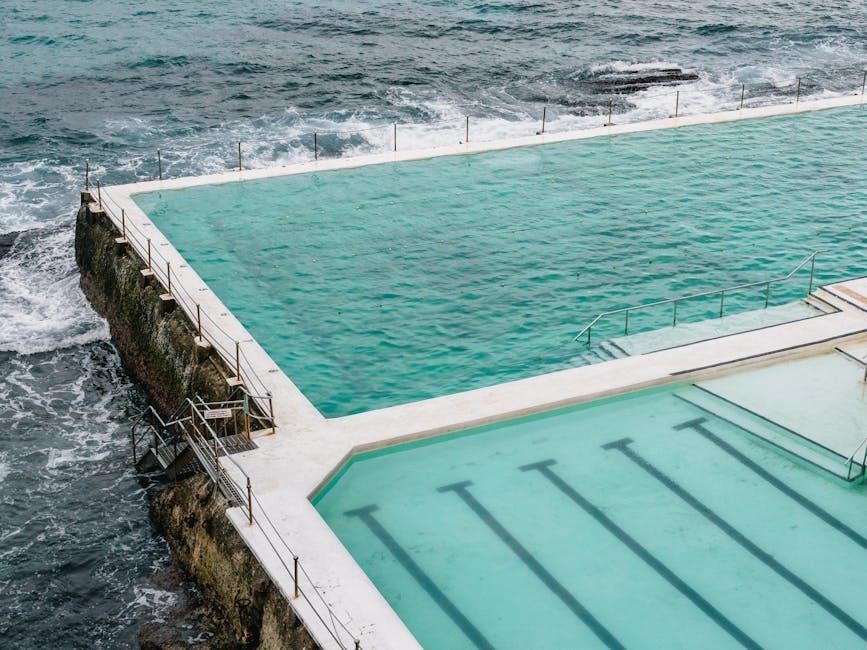
Skimming is the first line of defense against a dirty pool, and a pool maintenance guide PDF will consistently emphasize its importance. This simple, yet crucial task involves removing floating debris – leaves, twigs, insects, and pollen – before they sink to the bottom and decompose. Utilizing a long-handled pool net, systematically sweep across the water’s surface, ensuring complete coverage.
Pay particular attention to areas where wind tends to accumulate debris, such as corners and around pool equipment. Frequent skimming, ideally daily during peak seasons, prevents staining, reduces the load on your filtration system, and minimizes algae growth. A clean surface also allows sunlight to penetrate the water more effectively, aiding in natural sanitization. Remember, consistent skimming contributes significantly to overall pool health and reduces the need for more intensive cleaning later on, as detailed in many comprehensive pool maintenance guides.
Vacuuming the Pool Floor
A key component detailed in any good pool maintenance guide PDF is regular vacuuming. Over time, debris inevitably settles on the pool floor – dirt, sand, algae, and other particles that skimming misses. Vacuuming removes this accumulated grime, preventing staining and maintaining water clarity. You can choose between manual vacuuming, requiring a vacuum head and hose connected to the skimmer, or an automatic pool cleaner.
Regardless of the method, a systematic approach is best. Overlap your vacuuming strokes slightly to ensure complete coverage. Pay close attention to areas prone to debris accumulation, like corners and around steps; A pool maintenance guide will often recommend vacuuming at least once a week, or more frequently during periods of heavy use or after storms. Proper vacuuming not only improves the aesthetic appeal of your pool but also enhances the efficiency of your filtration system, contributing to a healthier and more enjoyable swimming experience.
Brushing Pool Walls and Tiles
As highlighted in most comprehensive pool maintenance guide PDFs, brushing is a frequently underestimated, yet vital, task. Algae and dirt readily adhere to pool walls and tiles, creating unsightly buildup and potentially harboring bacteria. Regular brushing disrupts this adhesion, making it easier for the filter to remove the contaminants. Utilize a pool brush – nylon for vinyl liners and stainless steel for plaster or tile surfaces – and systematically scrub all interior surfaces.
Focus on areas prone to algae growth, such as steps, corners, and behind ladders. A pool maintenance guide will emphasize the importance of brushing even if visible algae isn’t present, as it helps prevent future outbreaks. Brushing also polishes the tile line, restoring its shine. Aim to brush your pool walls and tiles at least once a week, or more often if you notice any discoloration or sliminess. This simple practice significantly contributes to a cleaner, healthier, and more inviting swimming environment.

Water Chemistry & Testing
A detailed pool maintenance guide PDF stresses the importance of balanced water. Consistent testing for pH, alkalinity, calcium hardness, and sanitizer levels is crucial for swimmer comfort and equipment protection.
Understanding Pool Water Chemistry Basics (pH, Alkalinity, Calcium Hardness)
A comprehensive pool maintenance guide PDF will invariably dedicate significant attention to water chemistry, as it’s the cornerstone of a safe and enjoyable swimming experience. Understanding the interplay between pH, alkalinity, and calcium hardness is paramount; pH, measuring acidity or alkalinity on a scale of 0-14, ideally sits between 7.2 and 7.8. Too low, and the water becomes corrosive, damaging equipment and irritating skin; too high, and scale forms, reducing sanitizer effectiveness.
Total Alkalinity acts as a pH buffer, preventing drastic swings. Maintaining a level between 80-120 ppm ensures pH stability. Low alkalinity leads to pH instability, while high alkalinity makes pH difficult to adjust. Finally, Calcium Hardness refers to the amount of calcium dissolved in the water, ideally between 200-400 ppm. Low calcium hardness can cause etching of plaster surfaces, while high levels lead to scaling.
A quality pool maintenance guide PDF will explain how these three factors are interconnected and provide clear instructions on how to test and adjust each one, ensuring optimal water balance for both swimmers and the pool itself.
Testing Pool Water Regularly
A detailed pool maintenance guide PDF consistently emphasizes the critical importance of regular water testing. It’s not enough to simply balance chemicals occasionally; consistent monitoring is key to preventing problems before they arise. Ideally, testing should occur at least twice weekly during peak swimming season, and weekly during off-peak times. A pool maintenance guide PDF will outline various testing methods, including liquid test kits, test strips, and digital photometers, detailing the pros and cons of each.
Beyond pH, alkalinity, and calcium hardness, a comprehensive test should also include levels of Free Available Chlorine (FAC) or other sanitizers, Cyanuric Acid (CYA – stabilizer), and potentially metals like iron and copper. Accurate record-keeping, as often suggested within a pool maintenance guide PDF, is also vital.
Tracking test results over time allows you to identify trends and proactively adjust chemical levels. Remember, consistent testing, coupled with the knowledge gained from a reliable pool maintenance guide PDF, is the foundation of a healthy and safe pool environment.
Adjusting Chemical Levels – A Step-by-Step Guide
A thorough pool maintenance guide PDF provides a detailed, step-by-step approach to adjusting chemical levels, emphasizing safety first. It stresses always reading and following the manufacturer’s instructions on chemical containers. Begin by calculating the pool’s volume accurately – a miscalculation can lead to imbalances. Adjusting pH and alkalinity should always precede shocking or adding algaecide, as these impact their effectiveness.
The pool maintenance guide PDF will typically advise adjusting alkalinity first, aiming for 80-120 ppm, then pH to 7.2-7.8. Calcium hardness should be maintained between 200-400 ppm. When adding chemicals, pre-dissolve them in a bucket of water (always add chemical to water, never water to chemical!) before slowly pouring around the pool perimeter with the pump running.
Re-test the water after allowing sufficient circulation (typically 6-8 hours) and repeat adjustments as needed. A good pool maintenance guide PDF will include troubleshooting tips for common imbalances and their solutions.
Pool Equipment Maintenance
A comprehensive pool maintenance guide PDF details crucial equipment upkeep. Regular inspection and cleaning of filters, pumps, and heaters—if present—are vital for optimal performance and longevity.
Filter Cleaning and Maintenance
A detailed pool maintenance guide PDF will emphasize the critical role of filter upkeep. Your pool’s filter is the frontline defense against debris, ensuring clear and healthy water. Different filter types – sand, cartridge, and diatomaceous earth (DE) – require unique cleaning procedures.
Sand filters benefit from backwashing, a process reversing water flow to flush out accumulated dirt. Cartridge filters necessitate periodic removal and rinsing with a garden hose, while more thorough cleaning with a filter cleaner is recommended several times a season. DE filters require backwashing and occasional disassembly for a complete cleaning, including replacing the DE powder.
Regularly checking the filter pressure gauge, as outlined in your guide, indicates when cleaning is needed. Ignoring filter maintenance leads to reduced water flow, increased strain on the pump, and ultimately, a cloudy and unsanitary pool. A well-maintained filter significantly extends the life of your pool equipment and contributes to a more enjoyable swimming experience. Following the PDF’s schedule is paramount for optimal results.
Pump Inspection and Maintenance
A comprehensive pool maintenance guide PDF stresses the importance of regular pump inspection. The pump is the heart of your pool’s circulation system, and neglecting its maintenance can lead to costly repairs or replacement. Begin by visually inspecting the pump for any leaks or cracks in the housing.
Check the pump strainer basket frequently, removing leaves, hair, and other debris to ensure unrestricted water flow. Lubricate the pump lid O-ring with a silicone-based lubricant to maintain a watertight seal. A pool maintenance guide PDF will detail how to inspect the pump motor for unusual noises or vibrations, which could indicate bearing wear.
Periodically check the voltage and amperage of the motor to ensure it’s operating within the manufacturer’s specifications. Proper pump maintenance, guided by your PDF, extends the pump’s lifespan, reduces energy consumption, and ensures efficient pool circulation, contributing to cleaner and healthier water. Ignoring these steps can lead to system failure.
Heater Maintenance (if applicable)
A detailed pool maintenance guide PDF provides crucial steps for heater upkeep, extending its life and ensuring efficient operation. If your pool is equipped with a heater, regular maintenance is paramount. Begin by visually inspecting the heater for any signs of corrosion or damage, particularly around the burner assembly and gas connections.
The pool maintenance guide PDF will emphasize the importance of cleaning the burner assembly annually to remove debris and ensure proper combustion. Check the air intake vents for obstructions, as restricted airflow can reduce heating efficiency. Inspect the heat exchanger for scaling or corrosion, which can impede heat transfer.
For gas heaters, a qualified technician should inspect the gas valve and pilot light annually. For electric heat pumps, check the refrigerant levels and ensure the fan is operating correctly. Following the guidelines in your PDF will optimize heater performance, reduce energy costs, and prevent potentially hazardous situations.

Seasonal Pool Maintenance
A pool maintenance guide PDF details vital opening and closing procedures. These checklists ensure proper preparation for swimming season and secure winterization, protecting
your investment against damage and simplifying spring startup.
Opening Your Pool for the Season

A detailed pool maintenance guide PDF is your essential companion when resurrecting your pool from its winter slumber. The first step, as outlined in many guides, involves removing any winter cover, carefully inspecting it for damage, and cleaning it thoroughly before storing it away. Next, lower the water level to allow for inspection and cleaning of the tile line, removing any accumulated debris or algae.
Following this, a comprehensive cleaning is crucial. This includes skimming the pool surface to remove leaves and twigs, and then vacuuming the pool floor to eliminate settled dirt and grime. Don’t forget to brush the pool walls and tiles to dislodge any remaining algae. Once physically clean, it’s time to focus on water chemistry. A pool maintenance guide PDF will instruct you to test the water’s pH, alkalinity, calcium hardness, and cyanuric acid levels.
Adjusting these levels is paramount before restarting the pump and filter. Shocking the pool is often recommended to kill any lingering bacteria or algae. Finally, inspect all pool equipment – the pump, filter, and heater – ensuring everything is functioning correctly before fully enjoying your revitalized pool. Following a guide ensures a safe and enjoyable swimming season!
Closing Your Pool for the Winter
A comprehensive pool maintenance guide PDF is invaluable when preparing your pool for the colder months. Begin with a thorough cleaning – skimming the pool surface to remove all debris, followed by vacuuming the pool floor to eliminate settled dirt. Brushing the pool walls and tiles is also essential to prevent algae growth during the off-season.
Next, balance the water chemistry, paying close attention to pH, alkalinity, and calcium hardness, as detailed in your guide. Lowering the pH and shocking the pool helps prevent algae and scale buildup. After water balance, lower the water level below the skimmer and return lines. Drain all equipment – the pump, filter, heater, and chlorinator – to prevent freezing damage.
Plug all return lines and skimmer openings with winterizing plugs. Cover the pool with a winter cover, securing it tightly to withstand the elements. Many pool maintenance guide PDFs recommend adding a winterizing algaecide for extra protection. Proper winterization, guided by a reliable PDF, ensures a smooth and trouble-free pool opening next spring!